
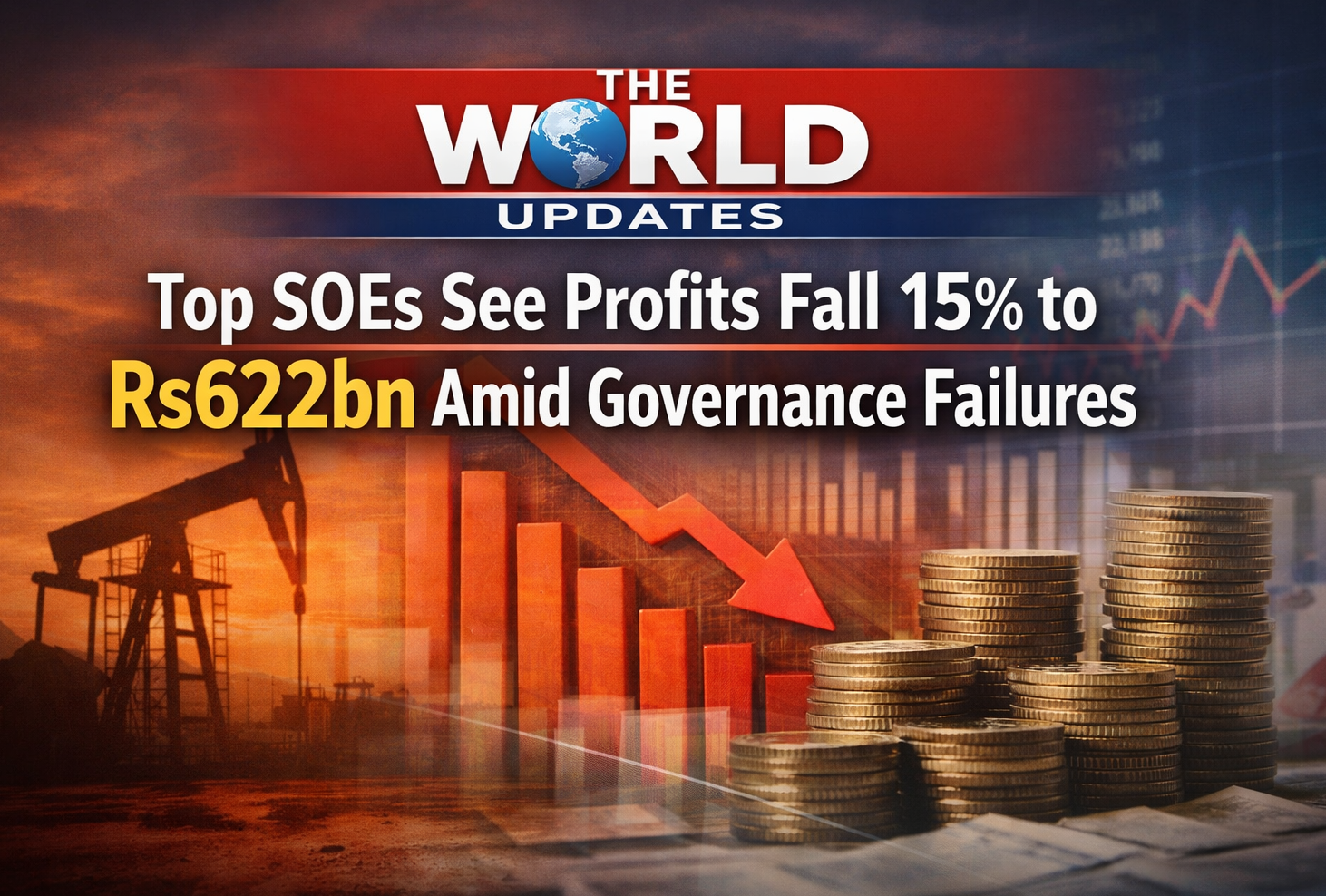
ISLAMABAD: The combined profits of Pakistan’s top 15 state-owned enterprises (SOEs) declined by 15% in the last fiscal year, falling to Rs622 billion, as weak governance, ineffective boards, and delayed audits continued to undermine performance, according to a new report by the Ministry of Finance.
The State-Owned Entities (SOEs) Report for FY2024–25, prepared by the Central Monitoring Unit of the Ministry of Finance and approved by the Cabinet Committee on State-Owned Enterprises, revealed that only one government-owned company earned profits exceeding Rs100 billion during the year. Overall profitability was down by Rs30 billion, or 5%, compared to the previous fiscal year.
The report, which is awaiting ratification by the federal cabinet and has not yet been officially released, highlighted serious structural and governance shortcomings across public sector companies. It noted that SOE boards were largely incomplete, template-driven, and lacked effective oversight, particularly through audit and risk committees.
According to the finance ministry, decision-making within boards remained weak, accountability mechanisms were ineffective, and there was no systematic assessment of board performance. While boards formally included 50% independent directors, the report found limited independence in practice and minimal challenge to management decisions.
The findings reflect poorly on governance during the tenure of Prime Minister Shehbaz Sharif’s government, as boards continued to be dominated by political appointees and favoured individuals. An earlier directive by the prime minister to cap board fees for bureaucrats at Rs1 million and recover surplus payments was later withdrawn following resistance from the bureaucracy.
The report also flagged serious transparency issues, noting inconsistent reporting of key performance indicators, risks, and financial decisions. Fewer than 36% of SOEs completed their audits on time, forcing key decisions to be taken on the basis of estimates and weakening the credibility of financial valuations. The ministry warned that these delays were increasing fiscal risks.
Despite the overall decline, 14 SOEs posted profits exceeding Rs10 billion during the year, though earnings were heavily concentrated among a few entities. Oil and Gas Development Company Limited (OGDCL) remained the largest profit-maker, earning Rs170 billion, although its profits declined by 19%. Pakistan Petroleum Limited followed with Rs90 billion, down 22%.
The National Bank of Pakistan ranked third, posting Rs57 billion in profit, a year-on-year increase of 106%. The Water and Power Development Authority earned Rs52 billion, while Government Holding Private Limited recorded Rs49 billion in profits.
Other profitable entities included Karachi Port Trust (Rs35.3 billion), Port Qasim Authority (Rs35 billion), Pak-Kuwait Investment Limited (Rs25 billion), and Pak-Arab Refinery Company (Rs22 billion), although the latter saw a sharp 60% decline in earnings. Pakistan National Shipping Corporation earned Rs20.5 billion, State Life Insurance Company Rs14.8 billion, and Sui Northern Pipelines Limited Rs14.5 billion.
The oil and gas sector’s combined profits fell by nearly 25% to Rs366 billion, driven by circular debt-related receivables, price normalisation, and what the ministry described as undue tax demands by the Federal Board of Revenue to meet revenue targets.
Meanwhile, the report warned that accumulated losses of loss-making SOEs had surged to Rs6.5 trillion and were rising by Rs700 billion to Rs900 billion annually. Daily losses across these entities amounted to nearly Rs3 billion, translating into more than Rs1 trillion per year and placing significant pressure on public finances.
Overall profitability across all government-owned companies declined 13% year-on-year, from Rs821 billion to Rs710 billion, as rising costs and delayed tariff adjustments eroded margins. The report also noted that total SOE assets shrank by 1% to Rs38 trillion, signalling continued value destruction despite the sector’s vast asset base.