
Beijing expands internships and tech sectors to tackle youth unemployment
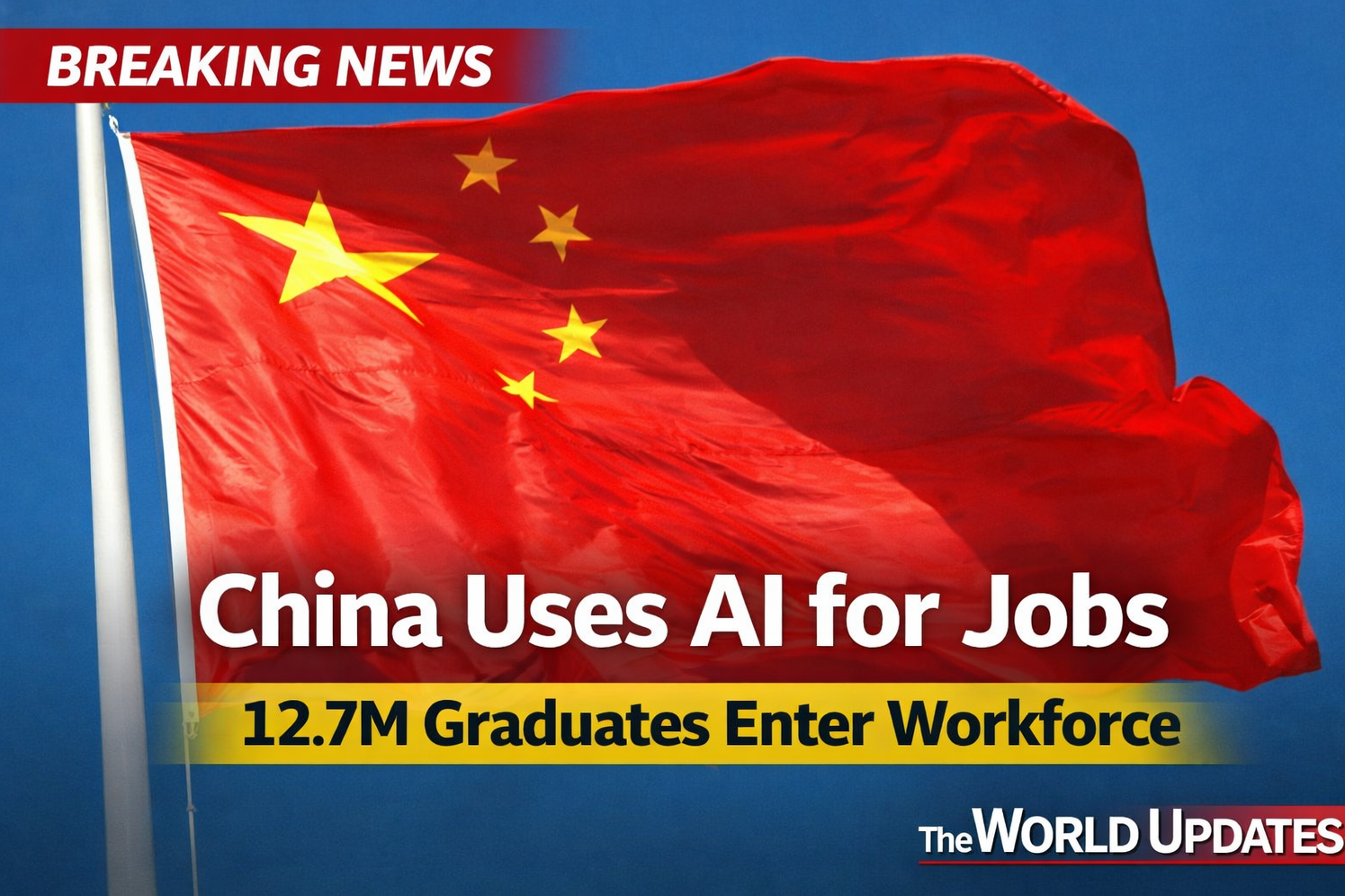
China is turning to artificial intelligence and emerging technology sectors as it faces a record surge of university graduates entering the workforce. With 12.7 million new graduates expected in 2026, the Chinese government is expanding AI-driven job initiatives, vocational training, and internships in an effort to stabilize youth employment and sustain economic growth.
Officials say the strategy reflects a broader shift in China’s labour market as the country transitions from traditional manufacturing toward technology-focused industries including generative AI, new energy vehicles, and the rapidly growing low-altitude economy.
Record Number of Graduates Pressures China’s Job Market
China’s Ministry of Human Resources and Social Security confirmed that 12.7 million students will graduate from universities in 2026, the highest number ever recorded in the country.
To put the figure into perspective, the number of graduates entering the workforce this year is larger than the total population of Belgium.
The surge highlights a growing challenge for policymakers who must ensure sufficient employment opportunities for young people entering the labour market.
Human Resources and Social Security Minister Wang Xiaoping said the government plans to expand job opportunities by integrating artificial intelligence into traditional industries and emerging technology sectors.
Officials believe this approach will help modernize industries while simultaneously creating new career paths for young professionals.
AI Seen as Tool for Job Creation, Not Job Loss
While many countries worry that artificial intelligence could replace workers, China is promoting a different narrative.
Beijing sees AI as a driver of productivity and job transformation, rather than a threat to employment.
According to Wang Xiaoping, the government aims to use AI to upgrade existing job roles and create entirely new categories of employment.
These include positions related to:
- AI development and training
- Data analysis and digital services
- Autonomous systems
- Smart manufacturing
- Robotics and automation management
By integrating AI into existing sectors, policymakers hope to expand employment opportunities while boosting productivity.
New Internship and Training Programs Introduced
To support graduates entering the workforce, the government has also expanded internship programs, vocational training initiatives, and industry partnerships.
Authorities say these programs are especially focused on sectors experiencing rapid growth.
Key areas receiving government support include:
Low-Altitude Economy
China is investing heavily in the low-altitude economy, which includes drone technology, aerial logistics, urban air mobility, and related aviation services.
This sector is expected to generate significant demand for engineers, software developers, and aviation specialists.
New Energy Vehicles
The country remains a global leader in electric vehicle production and battery technology.
Companies producing electric cars, batteries, and charging infrastructure are expanding hiring to meet rising global demand.
Generative Artificial Intelligence
China’s technology sector is increasingly focused on generative AI tools similar to large language models and advanced automation platforms.
Government-backed initiatives are encouraging startups and research centers to hire young graduates trained in computer science and data engineering.
Analysts Warn of Skills Gap
Despite the government’s ambitious plans, analysts warn that many graduates may lack the technical skills required by rapidly evolving industries.
Economists at Goldman Sachs noted that while artificial intelligence can significantly improve productivity, the transition toward technology-driven employment could create a skills mismatch.
Many university graduates still specialize in fields that may not directly align with the demands of AI and advanced manufacturing.
As a result, training programs and internships will play a crucial role in preparing students for these new opportunities.
China Targets 12 Million Urban Jobs
The government has set a target of creating at least 12 million new urban jobs by 2026.
Officials hope that expanding technology sectors and promoting AI integration will help achieve this goal.
Authorities also aim to keep China’s surveyed urban unemployment rate near 5.5% through 2030, which economists consider manageable for a country with China’s population size.
Maintaining employment stability remains a top priority for policymakers, particularly as China navigates economic restructuring and demographic changes.
Global Implications for Technology and Labour Markets
China’s approach to artificial intelligence and employment is closely watched by economists and global technology leaders.
Unlike many Western economies where AI is often framed as a risk to jobs, Beijing is positioning it as a strategic tool to stabilize employment and modernize industries.
The policy also intersects with broader geopolitical dynamics.
Investors and market analysts are closely monitoring upcoming US–China trade discussions, which could affect technology exports, semiconductor access, and AI development.
Restrictions on advanced technology could influence China’s domestic strategy for innovation and labour market development.
However, if China successfully integrates AI across industries while expanding job opportunities, it could reshape how governments worldwide respond to the rapid rise of artificial intelligence.