
Global energy markets stabilize as G7 considers releasing strategic oil stockpiles
Global oil markets experienced sharp volatility after crude prices surged above $119 per barrel, driven by escalating geopolitical tensions and supply disruptions in the Middle East. However, prices later dropped significantly after Group of Seven nations signaled they may release emergency oil reserves to stabilize global energy markets.
The sudden shift in oil prices highlights the growing impact of the Middle East conflict involving Iran, the United States, and regional allies, which has already disrupted global supply chains and increased fears of a wider energy crisis.
According to market data, crude prices jumped dramatically after tensions intensified around the strategic Strait of Hormuz, a critical route for global oil shipments.
Oil Prices Surge as Supply Routes Disrupted
Oil markets initially reacted strongly to the closure of the Strait of Hormuz and attacks on regional energy infrastructure.
During Monday trading, the benchmark Brent crude oil price surged by $21.25, reaching $119.50 per barrel. Meanwhile, West Texas Intermediate (WTI) crude climbed by about $21, reaching nearly $119.48 per barrel.
The dramatic increase represented one of the largest single-day price spikes in recent years.
Energy analysts say the surge was driven by fears that oil exports from Gulf producers could be severely disrupted.
Nearly 20 percent of the world’s oil supply normally passes through the Strait of Hormuz, making it one of the most strategically important energy corridors in the world.
When the route becomes unstable, global markets react almost immediately.
G7 Moves to Stabilize Energy Markets
As oil prices soared, G7 countries quickly began discussing potential measures to stabilize global markets.
Finance ministers from the G7 held a virtual meeting chaired by France, focusing on options to reduce price volatility and ensure adequate fuel supply.
One key proposal discussed during the meeting was the possible release of oil from strategic emergency reserves.
Although no final decision has been made, officials agreed that all available tools should be considered to restore stability in global energy markets.
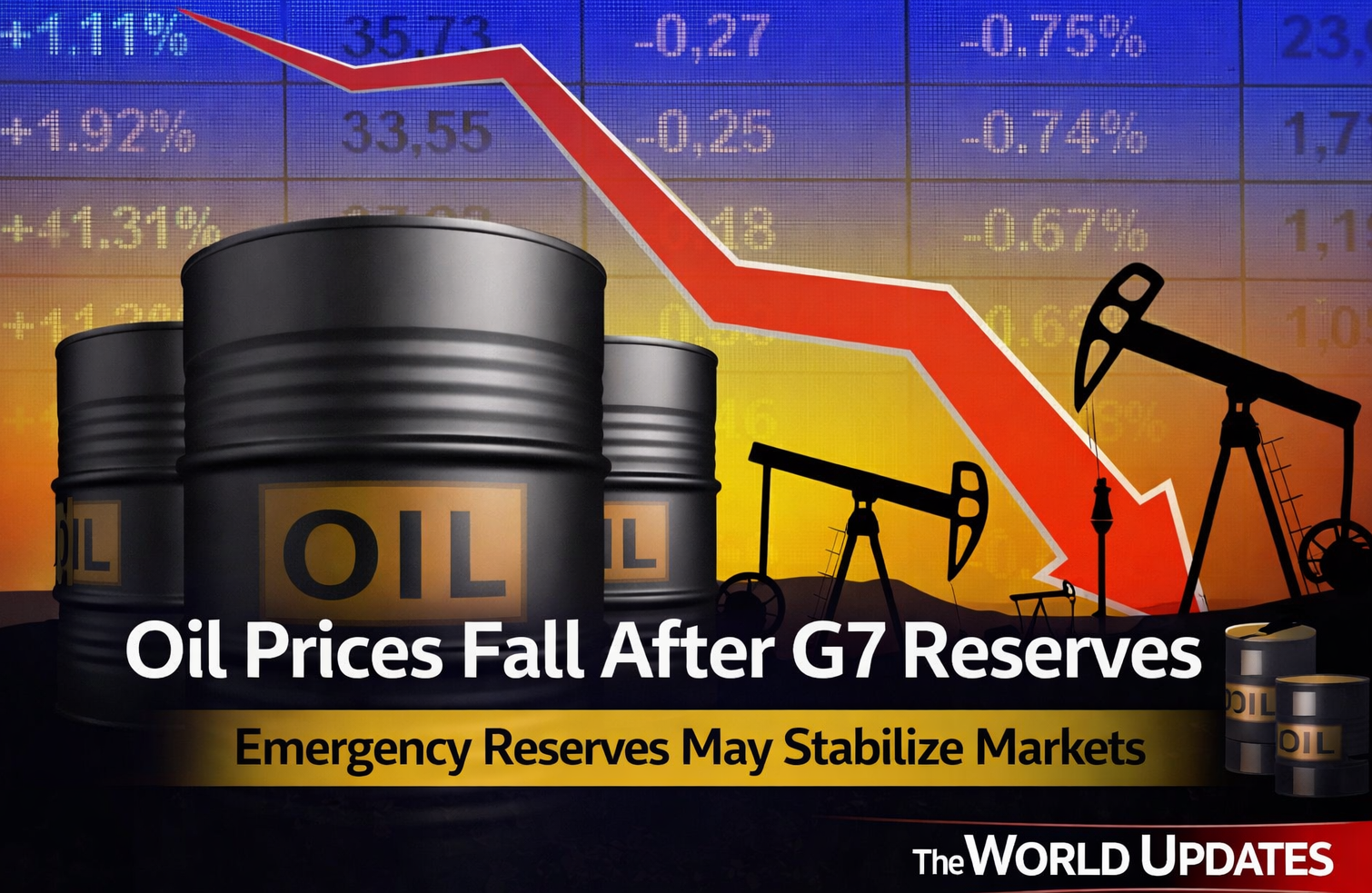
The proposal immediately influenced market sentiment, triggering a drop in oil prices.
Oil Prices Begin to Fall After G7 Signals
Following the G7 discussions, global oil prices started declining as traders anticipated additional supply entering the market.
Brent crude, which had peaked at $119.50 per barrel, fell to around $98.69 per barrel.
Similarly, WTI crude dropped from nearly $99.80 to about $95.65 per barrel.
Market analysts say the decline reflects investor expectations that emergency reserves could help offset supply disruptions from the Middle East.
However, energy experts caution that prices could remain volatile if geopolitical tensions persist.
International Energy Agency Considers Strategic Reserves
During the G7 discussions, officials from the International Energy Agency confirmed that emergency oil stockpiles remain a key option for stabilizing markets.
According to the agency, member countries collectively hold more than 1.2 billion barrels of government-controlled emergency oil reserves.
In addition, roughly 600 million barrels of oil are stored as industry reserves under government supervision.
These reserves are specifically designed to be used during global supply disruptions.
The last major coordinated release occurred in 2022, when governments used emergency reserves to stabilize markets after Russian invasion of Ukraine triggered a surge in global oil prices.
Strait of Hormuz Remains Major Concern
Despite the price decline, traders remain concerned about continued disruptions in the Persian Gulf region.
The Strait of Hormuz has reportedly remained closed for nearly a week, preventing oil and gas shipments from reaching global markets.
The narrow waterway serves as a gateway for oil exports from major producers including Saudi Arabia, United Arab Emirates, and Kuwait.
Any prolonged disruption could significantly affect global energy supplies and push prices higher again.
Energy traders and policymakers are therefore closely monitoring developments in the region.
Global Economy Watches Energy Markets
The rapid swings in oil prices illustrate how geopolitical conflicts can quickly impact the global economy.
Higher oil prices often lead to rising fuel costs, increased transportation expenses, and inflation in consumer markets.
For many countries, particularly those dependent on imported energy, prolonged price spikes can place significant pressure on national economies.
While the possibility of releasing strategic reserves has helped calm markets temporarily, analysts warn that lasting stability will depend on easing geopolitical tensions in the Middle East.
Until then, global energy markets are expected to remain highly sensitive to developments in the region.