
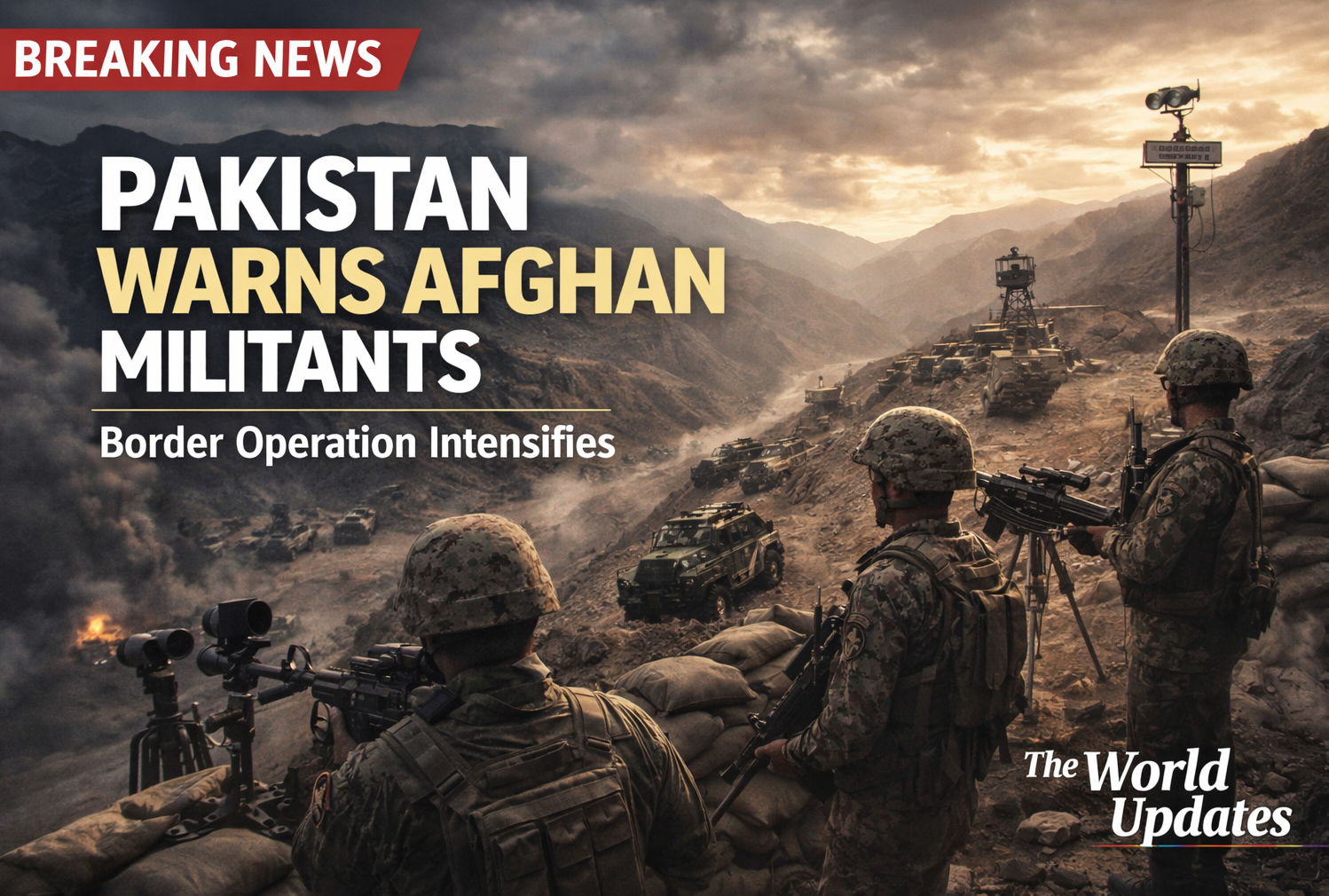
Pakistan’s Chief of Defence Forces and Chief of the Army Staff, Field Marshal Syed Asim Munir, has warned that Pakistan will take all necessary measures to neutralise security threats emerging from across the Afghanistan border.
During a visit to Wana in South Waziristan, the army chief reviewed the security situation along Pakistan’s western frontier and assessed operational preparedness of troops deployed in the region.
According to a statement released by the Inter-Services Public Relations (ISPR), Field Marshal Munir stressed that the use of Afghan territory by militant groups targeting Pakistan was unacceptable.
He said peace between Pakistan and Afghanistan would only become possible if the Afghan Taliban government ended its support for militant organisations operating against Pakistan.
Operation Ghazab Lil Haq Intensifies Along Pakistan-Afghanistan Border
Pakistan launched Operation Ghazab Lil Haq after renewed clashes erupted along the Pakistan-Afghanistan border. Afghan Taliban forces reportedly opened fire on several locations along the frontier, triggering a swift military response from Pakistan.
The military operation forms part of Islamabad’s strategy to counter cross-border militant activity. Security officials say the campaign will continue until authorities receive firm assurances from Kabul that terrorist groups will no longer operate from Afghan territory.
A senior Pakistani security official said the Afghan Taliban leadership must decide whether it will support Pakistan’s security efforts or continue allowing militant groups to use Afghan soil.
Pakistan Accuses Militants of Using Afghan Territory
During the briefing, the army chief said militant groups known as Fitna al Khawarij and Fitna al Hindustan continue to operate from Afghan territory.
Pakistani authorities use the term Fitna al Khawarij to describe militants belonging to the banned Tehreek-e-Taliban Pakistan (TTP). The term Fitna al Hindustan refers to militant groups active in Balochistan.
The military leadership reiterated that Pakistan will not tolerate cross-border attacks and will respond firmly to threats against national security.
Officials said intelligence-based operations continue across border regions to disrupt militant networks and improve security.
Army Chief Praises Troops for Vigilance and Operational Readiness
Field Marshal Munir also met officers and soldiers deployed in forward areas along the border.
He praised the troops for their professionalism, discipline, and high morale during ongoing military operations.
The army chief said the armed forces remain fully committed to defending Pakistan’s sovereignty and maintaining regional stability.
He expressed confidence in the combat readiness and operational coordination of units stationed along the western border.
Military officials believe the strong preparedness of Pakistani forces plays a crucial role in responding quickly to security challenges in the region.
Pakistan Reports Major Losses Inflicted on Afghan Taliban Forces
According to Pakistani security officials, Operation Ghazab Lil Haq has caused significant losses to Afghan Taliban forces involved in recent border clashes.
Officials said Pakistani forces have killed 481 Afghan Taliban combatants since the start of the operation.
Security forces also destroyed 226 military checkposts, captured 35 positions, and damaged numerous military vehicles and tanks.
Reports indicate that 198 armoured vehicles and tanks were destroyed, while more than 696 Afghan operatives were injured during the fighting.
Pakistani air strikes also targeted 56 locations inside Afghanistan, which officials said were linked to militant groups responsible for attacks inside Pakistan.
Rising Border Tensions Between Pakistan and Afghanistan
Relations between Pakistan and Afghanistan have become increasingly tense in recent months due to repeated border clashes and accusations of militant support.
Islamabad has long accused the Afghan Taliban government of failing to act against militant groups that carry out attacks in Pakistan.
The Taliban administration in Kabul has denied these allegations and rejected claims that militants operate freely inside Afghanistan.
The latest violence marks one of the most serious escalations between the two countries in recent years.
The fighting follows previous clashes in October that resulted in more than 70 deaths on both sides of the border.
Cross-Border Violence Disrupts Trade and Regional Stability
Border tensions have also disrupted trade and movement between the two neighbouring countries.
Several major border crossings remain closed following previous clashes that caused infrastructure damage and civilian casualties.
The tensions increased further after a series of explosions in Kabul last year triggered retaliatory actions near the border.
Taliban forces later targeted several areas along the Pakistan frontier, prompting Islamabad to respond with cross-border shelling.
These developments have complicated diplomatic relations between the two countries and raised concerns about long-term regional stability.
Pakistan Reaffirms Commitment to National Security
During his visit to South Waziristan, Field Marshal Munir laid a floral wreath at the Martyrs Monument to honour soldiers who lost their lives defending the country.
He offered prayers and reaffirmed that the sacrifices of fallen soldiers remain a cornerstone of Pakistan’s national security.
Military officials say Pakistan will continue to take firm steps to protect its borders and counter militant threats.
Security experts believe the situation along the Pakistan-Afghanistan frontier will remain closely monitored as military operations continue.