
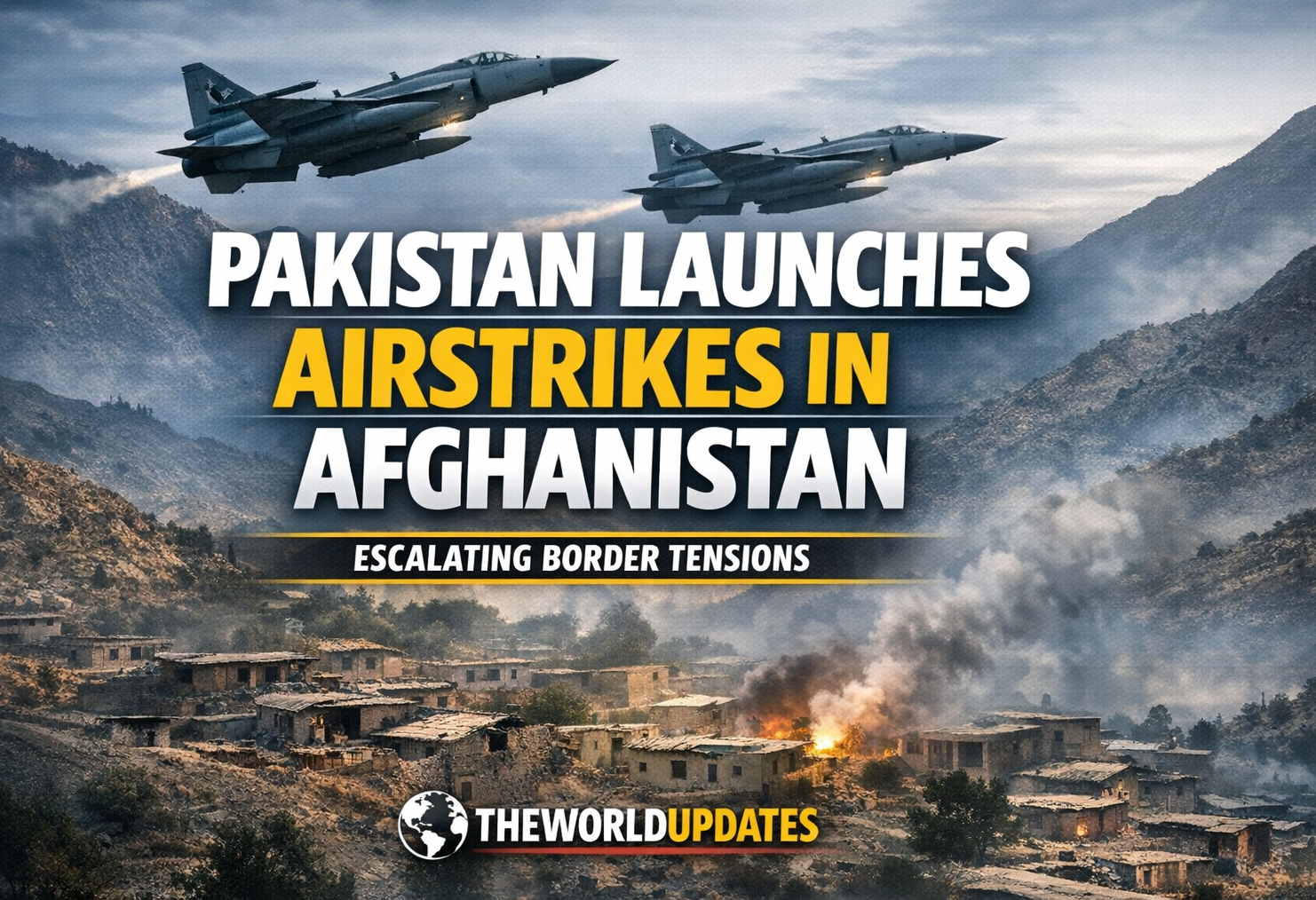
Islamabad: Pakistan on Sunday confirmed that its military carried out airstrikes targeting suspected militant camps across the border in Afghanistan, marking a significant escalation in already fragile relations between the two neighboring countries.
According to Pakistan’s Ministry of Information, the strikes were “intelligence-based and selective operations” aimed at dismantling seven militant camps allegedly linked to a recent wave of deadly attacks inside Pakistan.
Officials said the targets included members of Tehrik-e-Taliban Pakistan (TTP), commonly known as the Pakistani Taliban, along with affiliated groups and operatives connected to the Islamic State.
The development comes after a month marked by increasing violence in Pakistan. Most recently, militants killed two Pakistani soldiers, including a lieutenant colonel, in the country’s northwest. Earlier this month, a suicide bombing at a Shia mosque in Islamabad claimed dozens of lives, intensifying pressure on the government to respond decisively.
Pakistan’s information ministry stated that authorities possess “conclusive evidence” that the February attacks were orchestrated by militants operating under the direction of Afghanistan-based leadership and handlers.
Afghan Government Condemns Strikes
Afghanistan’s Ministry of Defense confirmed that the airstrikes took place, strongly condemning them as a “blatant violation of Afghanistan’s national sovereignty” and a breach of international law.
According to Afghan officials, the strikes occurred in civilian areas in the eastern provinces of Nangarhar and Paktika. A religious seminary and multiple residential homes were reportedly hit during the operation.
Sayed Tayeb Hamad, a senior police official in Nangarhar, told Afghan state television that at least 18 people were killed, including women and children. State media reported that rescue teams were still recovering bodies from the rubble on Sunday morning.
Fragile Ceasefire Under Threat
The latest escalation threatens a delicate ceasefire that has been in place since October, following some of the deadliest cross-border clashes between the two countries in recent years.
Those earlier confrontations resulted in dozens of civilian casualties along the disputed 1,600-mile border, with both sides trading heavy fire.
Tensions peaked when Afghanistan launched retaliatory attacks after Pakistan conducted airstrikes near Kabul, further straining diplomatic ties.
Islamabad has long accused Kabul of providing safe haven to TTP militants, allegations that Afghan authorities have consistently denied.
In a November interview, Pakistan’s Defense Minister Khawaja Asif stated that Islamabad intended to “take out” the TTP leadership allegedly based in Afghanistan and would use “whatever means are available” to address the threat.
As both nations trade accusations and military actions, observers warn that continued escalation could destabilize the region further, undermining efforts to maintain peace along the volatile border.