
Shipment of Russian crude expected to reach Port Qasim amid rising geopolitical tensions
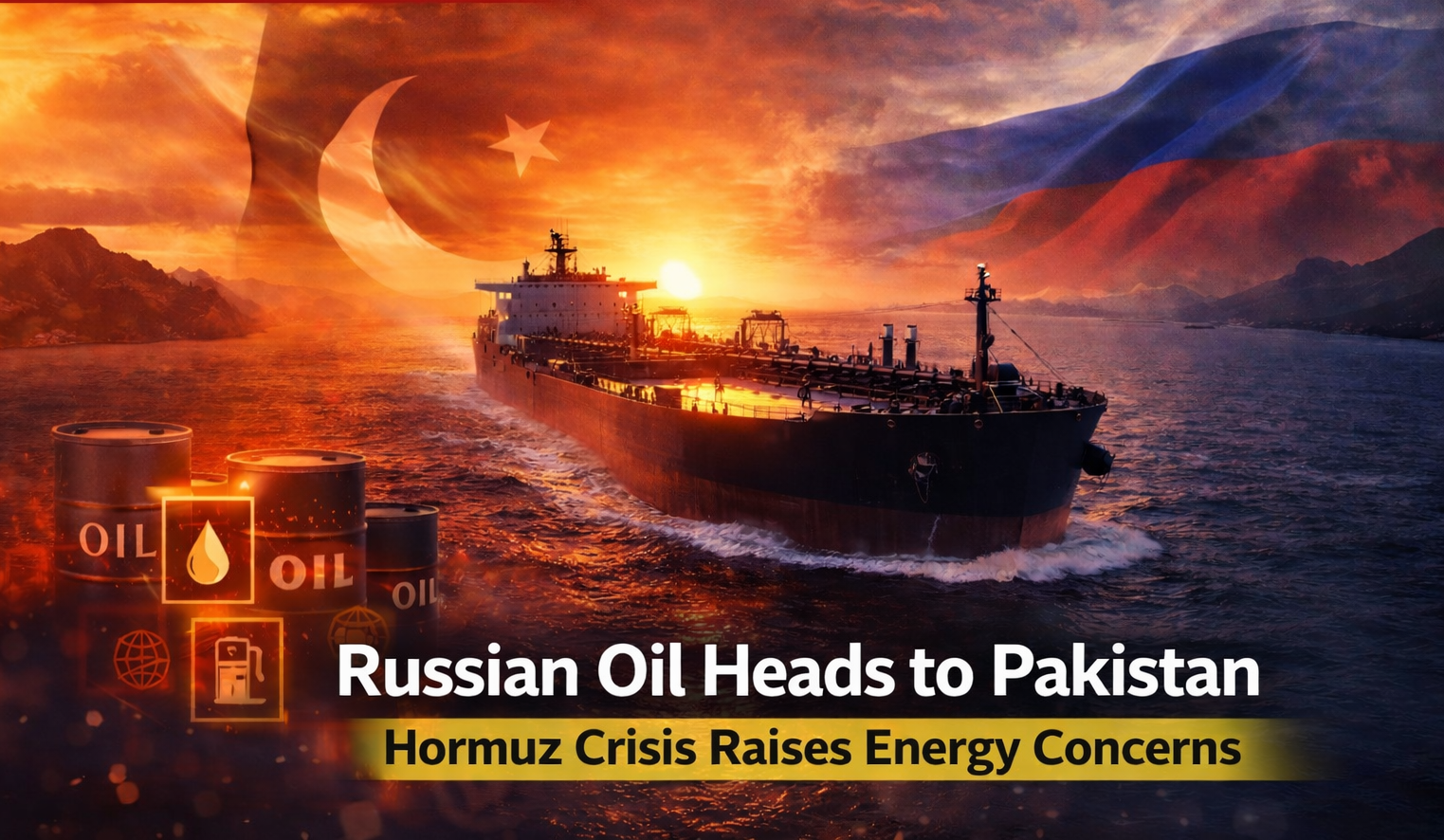
Amid rising geopolitical tensions and uncertainty in global energy markets, reports suggest that Russia is preparing to supply crude oil to Pakistan during the ongoing crisis in the Strait of Hormuz. Analysts say the move could help Islamabad manage energy costs as global oil prices face upward pressure due to instability in the Middle East.
According to reports cited by Russian media, around 733,000 barrels of Russian crude oil are expected to arrive soon at Port Qasim. The shipment is seen as part of Pakistan’s broader strategy to diversify energy imports while global supply routes remain uncertain.
Strait of Hormuz Crisis Raises Energy Security Concerns
The development comes during growing tensions around the Strait of Hormuz, one of the world’s most critical oil transit chokepoints.
Nearly one-fifth of the world’s oil supply passes through the narrow waterway connecting the Persian Gulf to global markets. Any disruption in the region can quickly push energy prices higher and trigger volatility across international markets.
Global energy analysts warn that instability in the Middle East could impact oil shipments from Gulf producers including Saudi Arabia and the United Arab Emirates, which have long been Pakistan’s primary energy suppliers.
As a result, Pakistan’s decision to secure Russian oil supplies may help reduce immediate risks linked to potential supply disruptions.
Russia Expands Energy Cooperation with Pakistan
Energy experts cited in Russian media reports say the shipment reflects expanding cooperation between Russia and Pakistan in the energy sector.
Global energy analyst Dr. Mamdouh Salameh reportedly said that Russia could increase crude shipments to Pakistan during periods of instability in the Gulf region.
The expected cargo of 733,000 barrels of crude oil will reportedly arrive at Port Qasim in the coming weeks. The delivery would help Pakistan maintain fuel supplies as global markets respond to geopolitical risks.
Pakistan previously imported Russian crude oil in recent years as Islamabad explored cheaper alternatives to traditional suppliers.
Those purchases marked a shift in Pakistan’s long-standing energy trade patterns.
Pakistan’s Long Dependence on Gulf Oil
For decades, Pakistan has relied heavily on Middle Eastern producers for energy imports.
Countries such as Saudi Arabia and the United Arab Emirates have historically provided the bulk of Pakistan’s crude oil supplies.
However, the country has increasingly explored diversified sources in recent years due to fluctuating global oil prices and economic pressures.
Analysts say buying Russian crude at competitive rates could help Islamabad reduce import costs, especially during periods of global price volatility.
Rising Oil Prices Threaten Pakistan’s Economy
Pakistan’s energy imports play a major role in the country’s economic stability.
According to analysis cited by the Pakistan Business Council, increases in global oil prices have a direct impact on the country’s financial position.
The council estimates that every 10% rise in global oil prices increases Pakistan’s current account deficit by approximately $1.5 billion to $2 billion.
Such increases place additional pressure on foreign exchange reserves and government finances.
Energy costs already represent one of the largest components of Pakistan’s import bill.
Oil Prices Near $100 Could Increase Deficit
Experts warn that if global oil prices climb significantly, Pakistan’s financial challenges could deepen.
Analysts estimate that if crude oil reaches $100 per barrel, Pakistan’s annual current account deficit could increase by between $5 billion and $7 billion.
This scenario could place further strain on Pakistan’s economy, which has faced persistent challenges including inflation, currency depreciation, and rising import costs.
Energy diversification, therefore, is becoming a key component of Pakistan’s economic strategy.
Global Implications of the Strait of Hormuz Crisis
The Strait of Hormuz crisis is not only affecting Pakistan but also influencing global energy markets.
Any disruption in the region can lead to rapid price spikes, impacting economies worldwide.
Major import-dependent countries across Asia and Europe closely monitor developments in the Gulf because even minor disruptions can trigger global supply chain shocks.
Energy analysts say countries are increasingly exploring alternative suppliers and shipping routes to reduce reliance on vulnerable chokepoints.
Pakistan Seeks Energy Stability
For Pakistan, securing oil from Russia during periods of geopolitical uncertainty could help stabilize domestic fuel supplies.
While the long-term scale of Russian imports remains unclear, the current shipment signals Islamabad’s willingness to expand energy partnerships beyond traditional suppliers.
With global energy markets facing continued volatility, analysts expect Pakistan to pursue diversified oil import strategies in the years ahead.